01 · Identify
Find Where AI Creates Value.
We interview every role in scope, map recurring work and identify where time, cost and decision quality can be improved. The result is a ranked opportunity set and a measurable baseline.
Echelon partners with established businesses to engineer the infrastructure that takes them to AI-native and transform the way they operate.

 Nixon Electrical
 Quantum Club





 BP&M Group


 Nixon Electrical Quantum Club BP&M Group Nixon Electrical Quantum Club BP&M Group Nixon Electrical Quantum Club BP&M Group
 The Tools Are There.
The Transformation Isn’t.
The models are advancing faster than most businesses can operationalise them. Teams can generate, summarise and prototype, but that intelligence still does not translate to tangible ROI within the business. Businesses know they should be using AI but struggle to see what it is changing commercially.
Make Intelligence Part Of
The Operating Model.
Echelon AI Solutions turns AI from a collection of tools into operating capability. We connect infrastructure to the business’s context and data, engineer agents and automations around live workflows, define where people stay in control and embed the capability into daily operations. The result is a business that can learn, decide and execute at a different speed almost entirely by itself.
We build a personalised AI operating system around the organisation’s own context, data, workflows and controls. It gives every automation the foundation required to perform reliably in live operations.
Strategy, process, teams, clients and suppliers held in one system the business owns, so every action starts from the organisation’s operating context.
The systems already in use connected into one current operating picture, without the manual reconciliation.
Meetings, messages and system activity read as they happen, then synthesised into what actually matters and surfaced with the context a decision needs.
Recurring work engineered around the real workflow, tested in live conditions and governed by human oversight.
Capacity moves from performing and chasing to monitoring, deciding and creating the next source of value.
For leadership teams redesigning how the organisation operates. We identify the highest-value opportunities, architect the operating layer, engineer the priority systems and embed the capability with the people who will own it.
For organisations with a defined problem, product or workflow. We work as a senior engineering partner inside your existing environment and deliver the production system without requiring a broader transformation programme.
Engagements from a single principal to company-wide implementation.
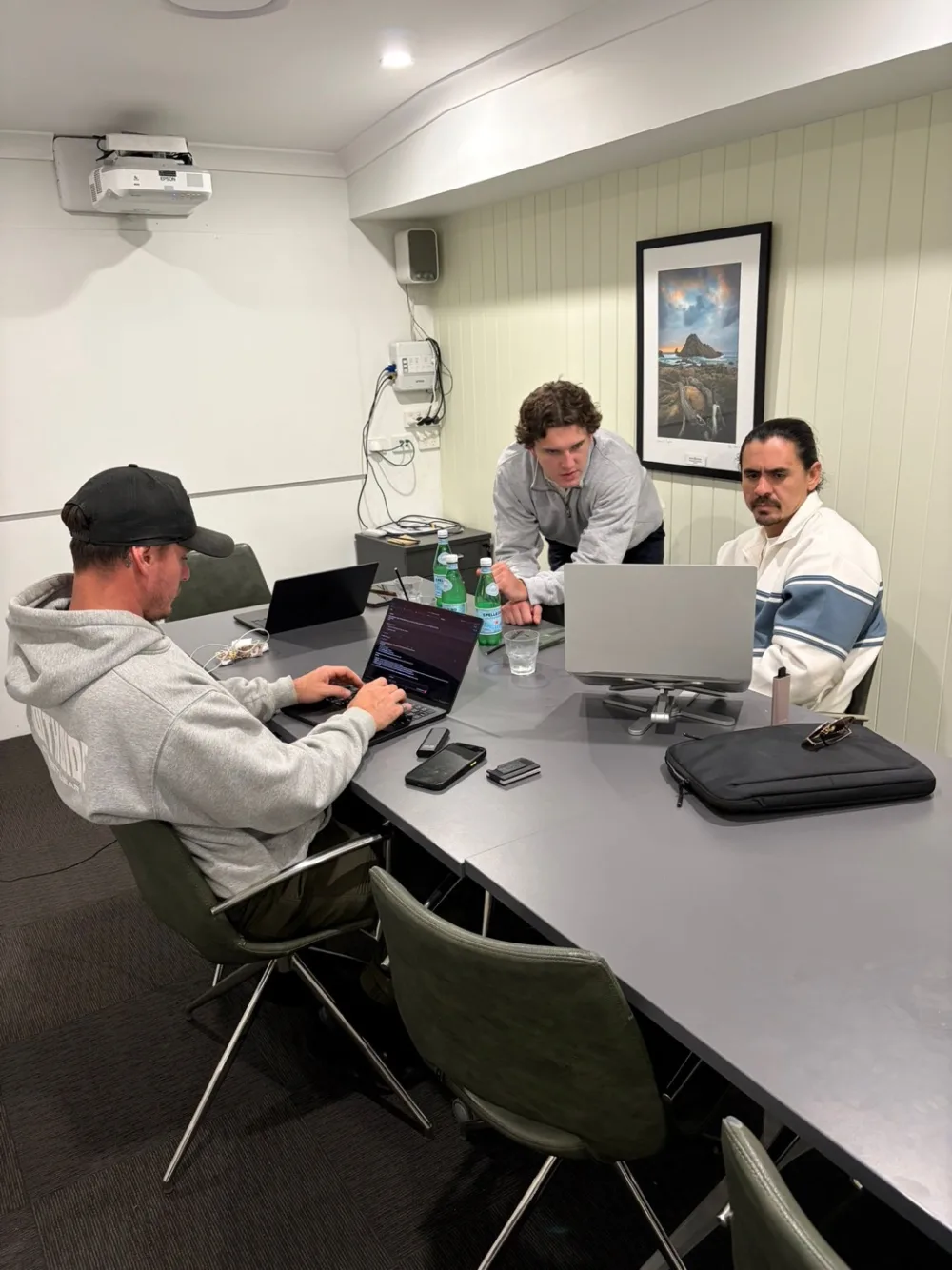
We interview every role in scope, map recurring work and identify where time, cost and decision quality can be improved. The result is a ranked opportunity set and a measurable baseline.
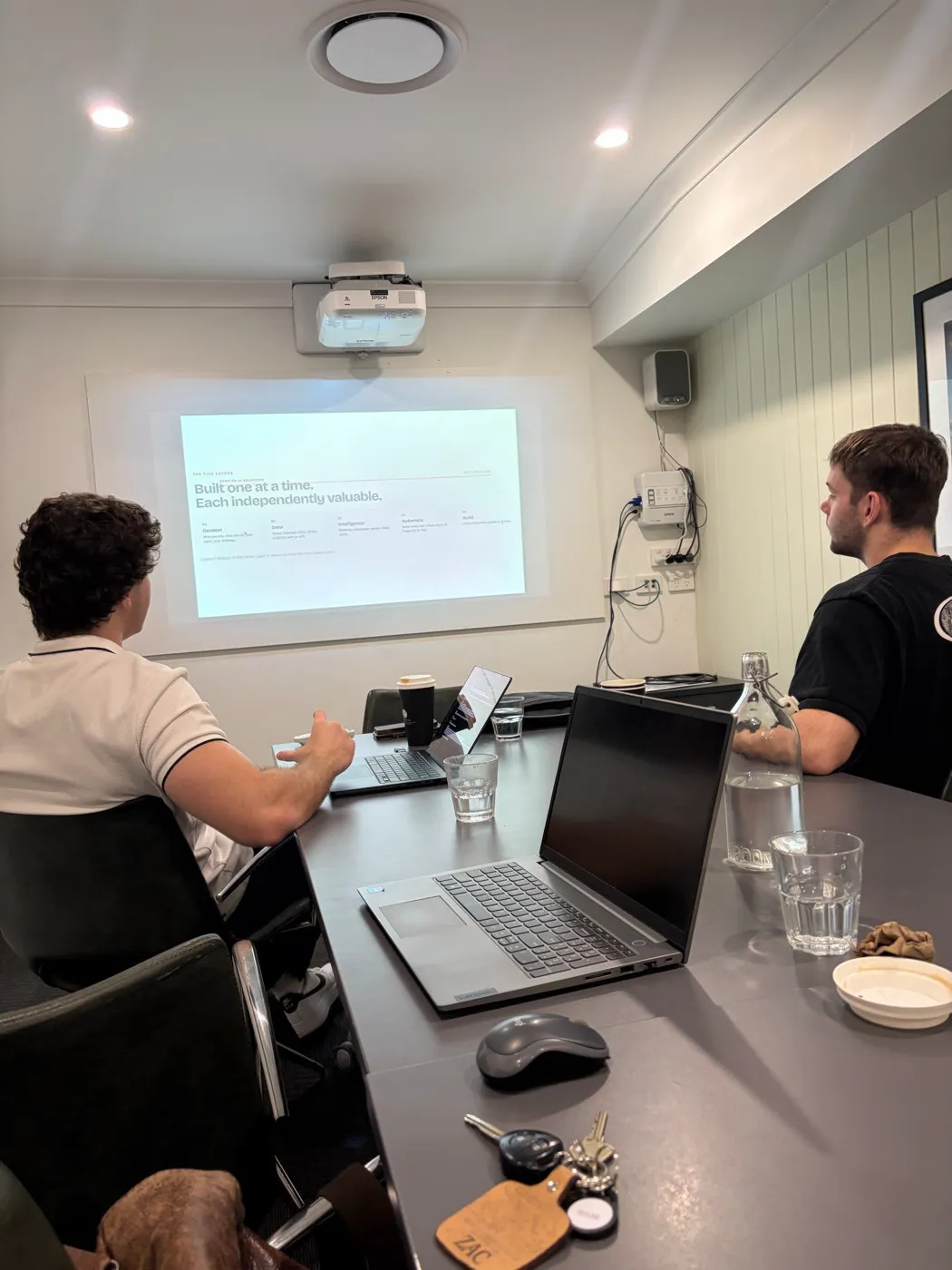
We architect the operating layer and engineer the priority systems inside your environment. Each build is tested against live workflows, controls and success criteria.
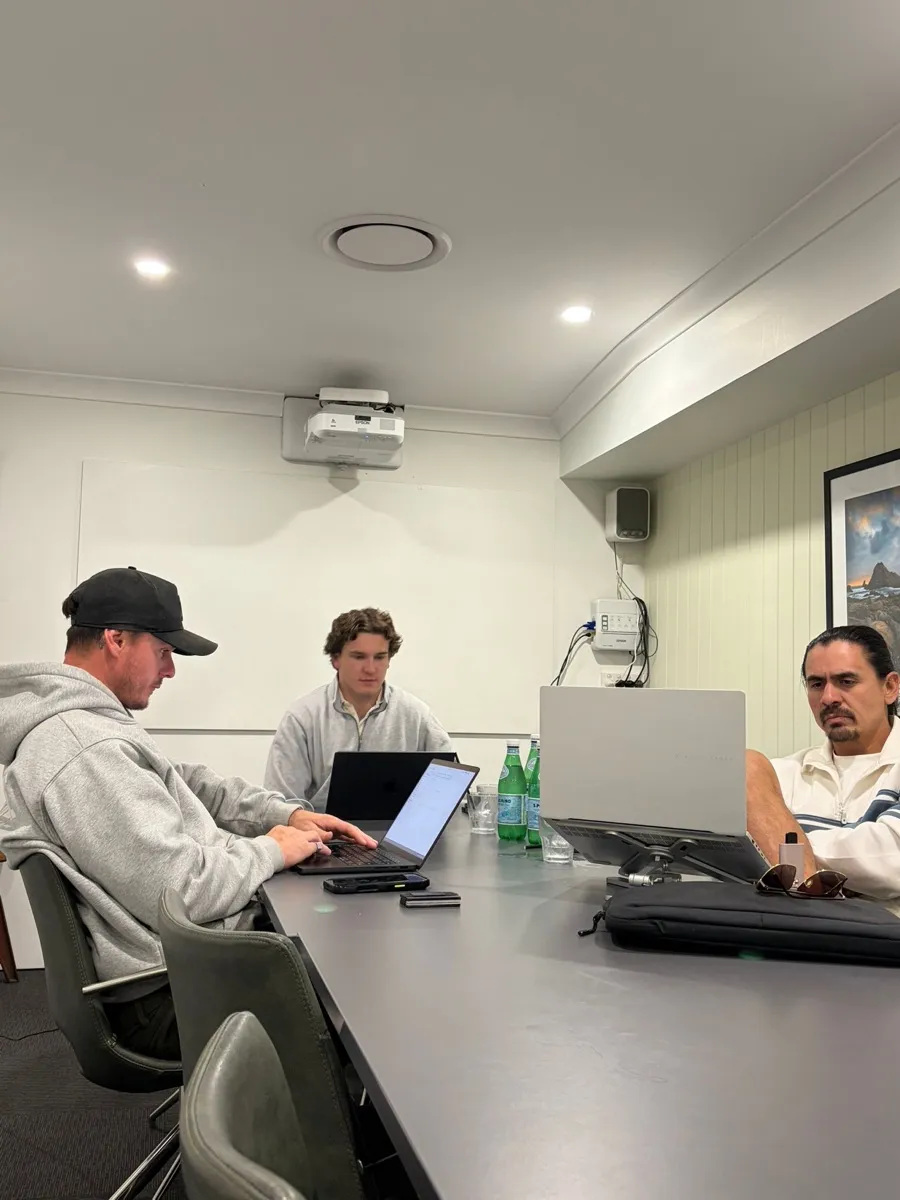
We introduce the systems into daily operations, train the people responsible for them and transfer the complete infrastructure. The engagement closes against the original baseline.


Roughly 65% of recurring work automated, 22–30 hours returned each week, $52,000 annual EBITDA added and an estimated $130,000 in enterprise value created.
Read the case study →
Seven hours returned each week, six recurring tasks running unattended, $36,000 annual EBITDA added and an estimated $90,000 in enterprise value created.
Read the case study →
Council submissions brought in-house, $50,000 annual EBITDA added and an estimated $125,000 in enterprise value created.
Read the case study →I can't recommend Sam from Echelon AI enough. There is definitely a race to integrate AI into businesses in 2026 and beyond. With the help of Sam and the systems implemented through my AIOS setup, I have been able to optimise the business, allowing me to automate, delegate, or eliminate a variety of different tasks and ultimately buy back more of my time. The setup was fairly easy and straightforward and the post-setup support has also been invaluable. Thanks again
It is the move from AI as a collection of tools to AI as operating capability. We diagnose where the value is, build an AI operating system around your context and data, engineer the priority automations, and hand the capability to your team. The result is a business that runs differently, not a business with more software.
A chat tool answers whatever is in the prompt in front of it. It does not know your clients, your process, your numbers or your standards, so someone rebuilds that context every time and the output stops at a draft. We connect the model to the business itself and engineer the workflow around it, so the work finishes instead of starting.
Plenty of our clients could, and we teach them either way, because the capability is meant to stay with your team. The difference is what gets finished. Learning between jobs gets you a working prompt; an engagement gets you production systems connected to your data, with the controls, error handling and documentation that let other people run them.
From the systems you already run. We connect the accounting, email, calendar, CRM, job management and storage tools in use, with Xero, Gmail, HubSpot, Slack, Notion, Simpro, Shopify and Stripe among them, and read from them directly, so the operating picture comes from source instead of being re-entered.
No. We design around the stack you have, and we will tell you plainly where a subscription is redundant, where one needs upgrading and where nothing needs to change. Anything required runs under accounts your organisation owns.
No. Engagements run from a single principal to company-wide implementation. Most begin where the operating pain is clearest, then extend once the first systems have proven their value.
Direct access to the people doing the work, not an account manager. The engagement includes interviews with every role in scope, working sessions through the build, and training on the finished systems with the people who will operate them.
You do. The context, documentation, accounts, credentials and automations are yours, running in your environment under your credentials, and the capability required to operate them transfers to your team.
AI will change how the best businesses operate. The question is whether that change is designed or inherited. We partner with leadership teams choosing to design it.