
Operational Diagnostic
We map how work actually happens across every role in scope, then rank recurring tasks against time, cost, feasibility and operating value.
For leadership teams redesigning how the organisation operates. We identify the highest-value opportunities, architect the operating layer, engineer the priority systems and embed the capability with the people who will own it.
Echelon AI Solutions is an AI transformation partner for established businesses. We map how your business actually runs, decide where AI earns its place, then build and install the systems that carry that change inside your own tools. Your team is trained to run them, and the business owns everything we build.
The work starts with how the organisation runs today: who does what, where the hours go, which decisions wait on someone assembling information by hand. That diagnostic sets the roadmap, the build order and the commercial case before anything is engineered.
Engagements from a single principal to company-wide implementation.
Proud to partner with

 Nixon Electrical

 Quantum Club






 BP&M Group



 Nixon Electrical Quantum Club BP&M Group Nixon Electrical Quantum Club BP&M Group Nixon Electrical Quantum Club BP&M Group
Transformation combines commercial judgement, systems engineering and operating change. A focused engineering engagement draws on the same technical capability at a narrower scope.
Executive reporting, document production, revenue operations, finance administration and function-specific workflows are examples of what may be built under 03.
We map how work actually happens across every role in scope, then rank recurring tasks against time, cost, feasibility and operating value.
We design the context, data, intelligence and control layers each system needs to operate reliably inside the existing environment.
We engineer production systems around the workflows the diagnostic justified and test them against real operating conditions.
We document, train and hand over the infrastructure so your people can operate it with confidence and the capability stays with the business.
We measure operational change against the baseline and translate it into a commercial result leadership, finance and an acquirer can scrutinise.
We interview every role in scope, map recurring work and identify where time, cost and decision quality can be improved. The result is a ranked opportunity set and a measurable baseline.
We architect the operating layer and engineer the priority systems inside your environment. Each build is tested against live workflows, controls and success criteria.
We introduce the systems into daily operations, train the people responsible for them and transfer the complete infrastructure. The engagement closes against the original baseline.
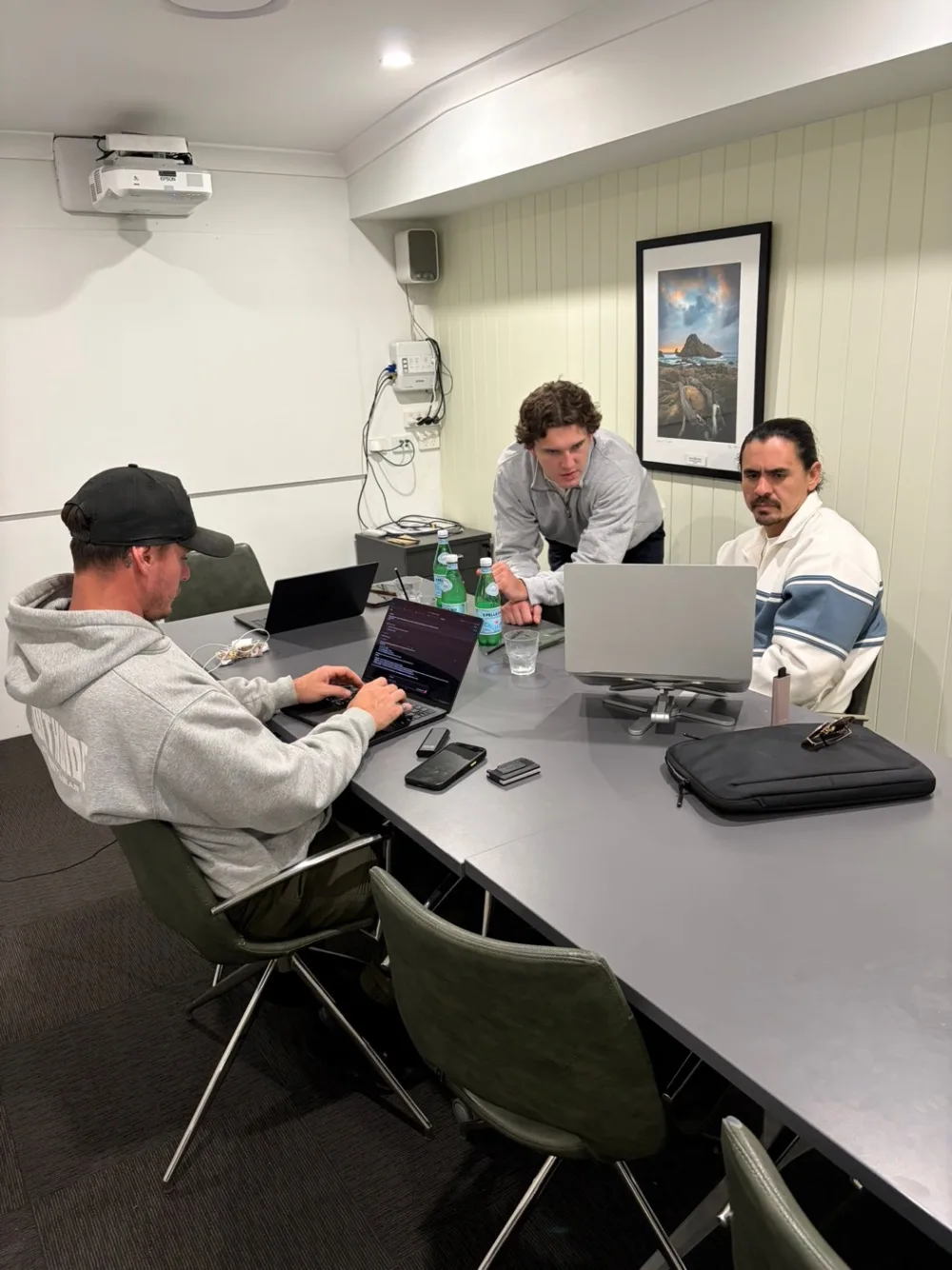
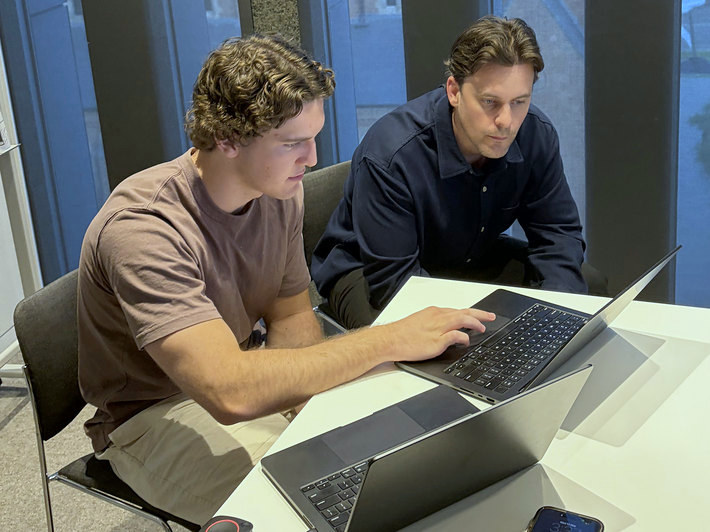
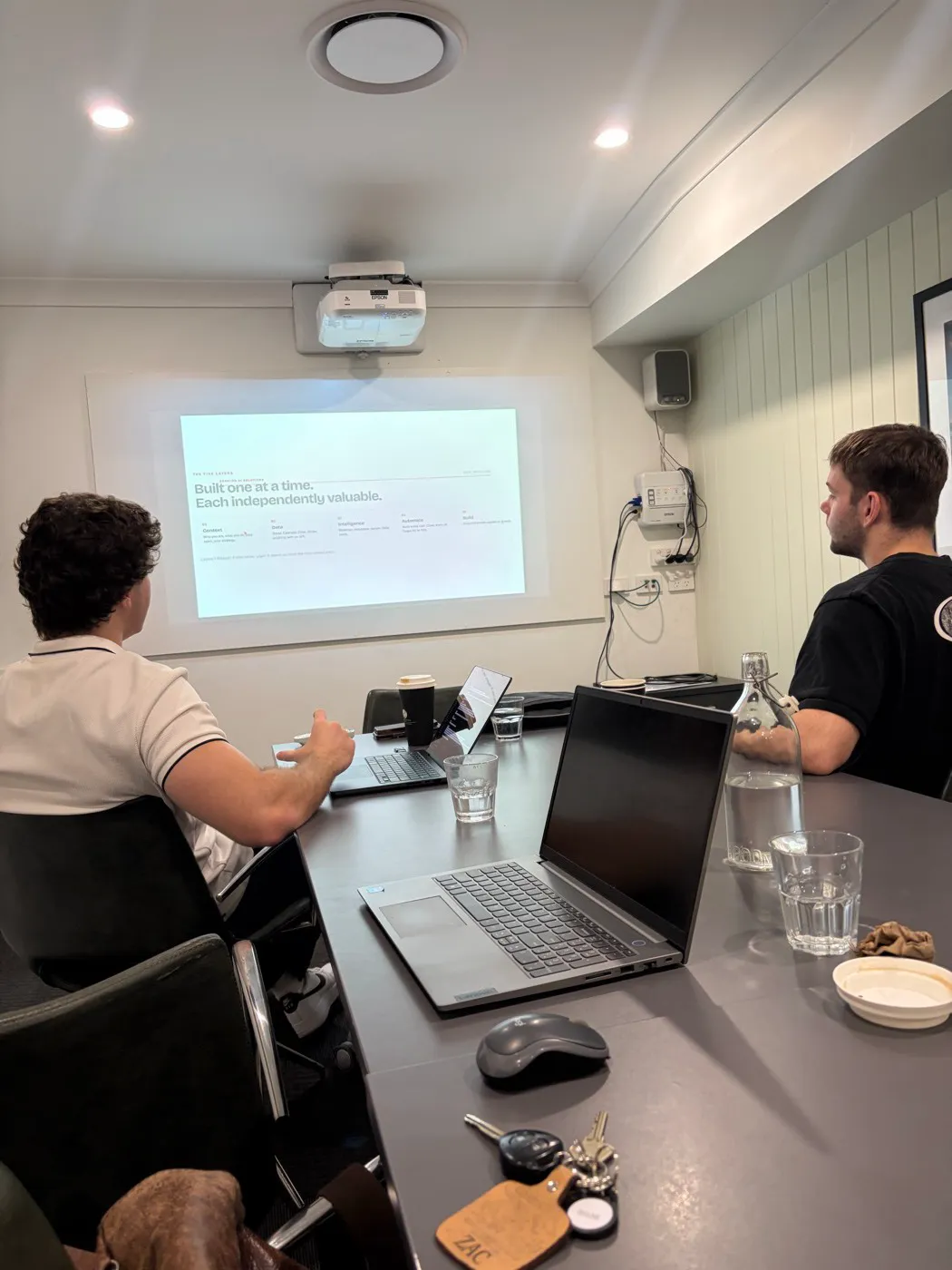
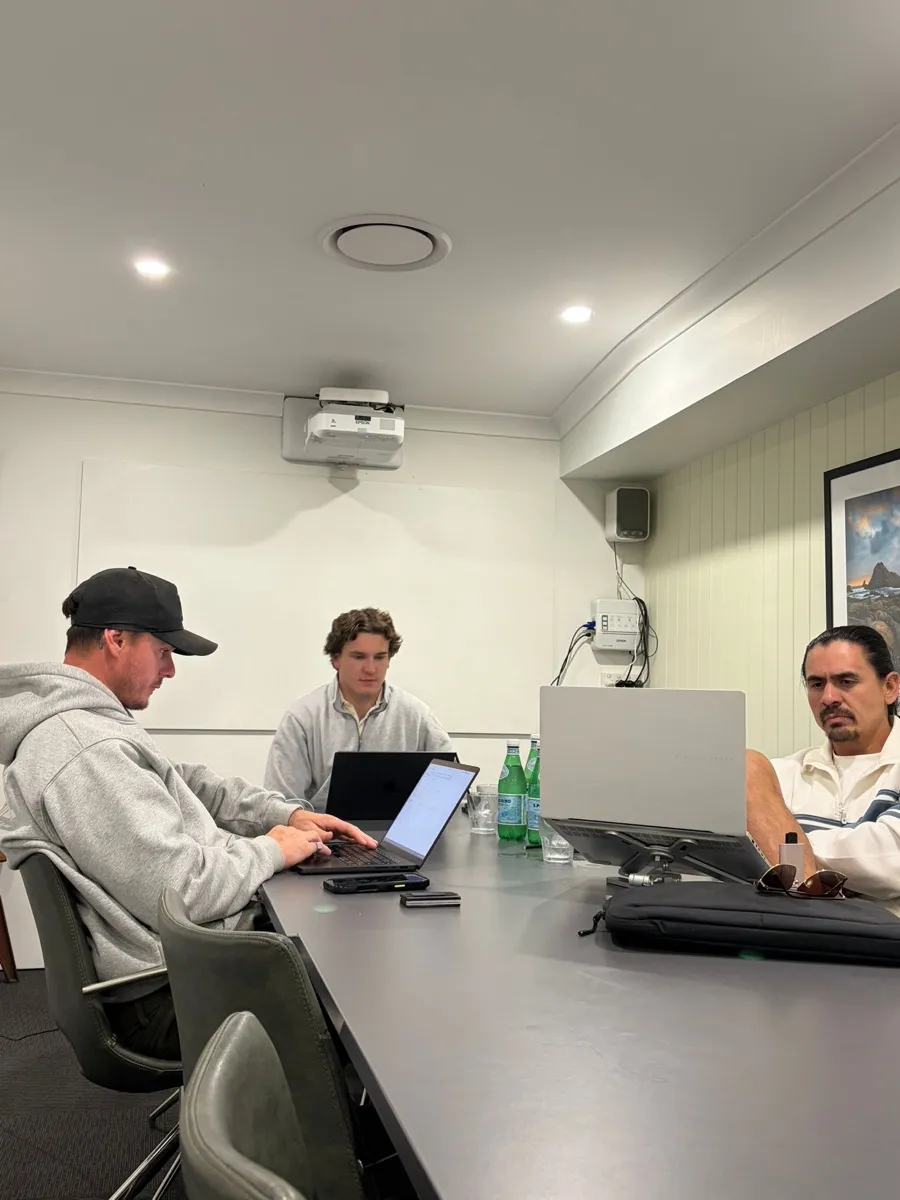
The personalised AI operating system connects the organisation’s context, data, intelligence and workflows. It gives each automation a reliable foundation and gives the business one operating layer it can own, govern and extend.
Strategy, process, teams, clients, suppliers and service lines are held in one system the business owns. Every action starts from the organisation’s own operating context.
The systems already in use are connected into one current view. Data moves between tools as required, replacing fragmented dashboards and manual reconciliation.
A quote gone cold, an invoice that does not match delivery, a metric moving outside tolerance. The system identifies the exception and brings the next decision forward.
Automations are built around the full workflow, tested against real operating conditions and given autonomy only when the organisation is ready.
As recurring work moves into the system, people shift from performing and chasing to monitoring, deciding and building the next source of value.
Recurring work moves into the background. Business knowledge becomes documented infrastructure. Reporting surfaces live, and senior people recover the capacity to lead. The result is an operation that is easier to run, scale and transfer.
Senior people spend less time performing recurring work and more time on clients, decisions and growth.
Critical process and context move out of memory and into infrastructure the wider organisation can use.
The context, documentation, accounts, credentials and automations the company runs on remain with the business.
Figures surface from the systems already in use, giving leadership a current position without a monthly reconstruction exercise.
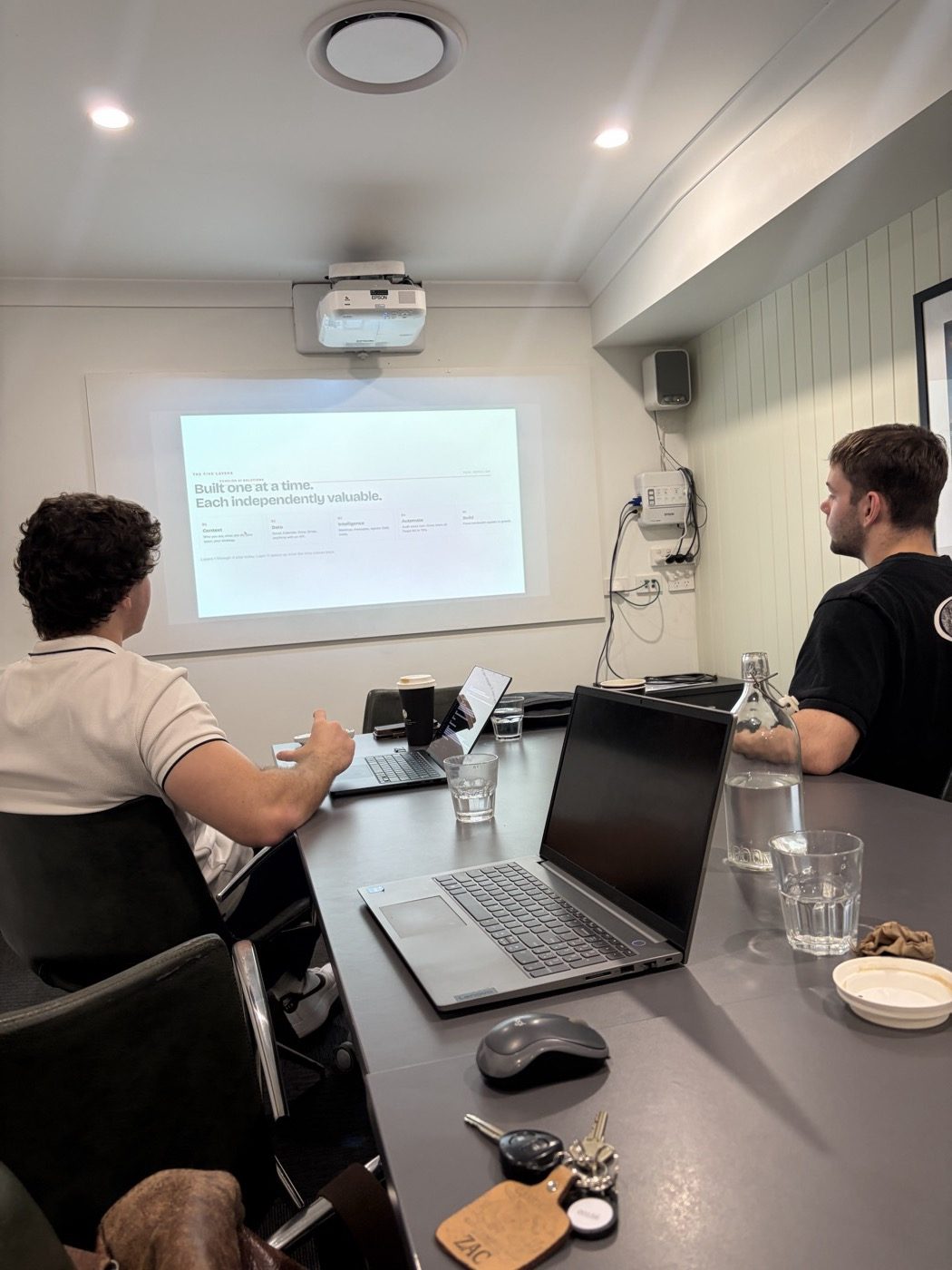
Digital transformation moved work onto software: the CRM, the accounting file, the job system. AI transformation changes who does the work inside that software, with systems that read, draft, reconcile and flag across the tools already in place, and people approving the decisions that matter. Echelon builds on the digital stack a business already runs, so an AI transformation doesn’t start by replacing it.
Pritesh Hirani went from about 3% to 25% of tasks automated across four businesses in three weeks, with around seven hours a week back, by his own figures. Drapery Co reached about 65% of recurring work automated across three retail brands in six weeks, with 22 to 30 hours a week back, by Fernanda’s estimate. Both businesses own the systems Echelon built for them.
By building around the work people already do and training them on it. Echelon interviews every role in scope before anything is built, tests each system on live workflows alongside the people who will use it, and hands over documentation and training at the end. Autonomy grows only as the output proves itself, so the team stays in control of what changes.
In McKinsey’s November 2025 State of AI survey, nearly two-thirds of respondents said their organisations had not yet begun scaling AI across the enterprise. A transformation is the work of scaling it: changing how the business operates, one proven system at a time. Source: McKinsey & Company, The State of AI, November 2025 (global survey)
It’s a change in how the business operates, not just in which tools it uses. Echelon starts by mapping roles, tasks and systems, ranks where AI would return the most time or money, then builds and installs the systems that change those workflows. The end state is a business that runs on systems it owns, with people approving the decisions that matter.
Every Echelon transformation starts with a diagnostic. We interview the people doing the work, map where the hours go and check which systems can be connected. The output is a ranked roadmap with the commercial case for each build, and you decide what gets built, and in what order, before anything is engineered.
No. Echelon builds inside the tools your business already runs, such as your inbox, Xero, your job system and your shared drives, connected under accounts you own. If the diagnostic shows a tool is the real constraint, we’ll say so, but replacing software is never a precondition for the work.
No. Echelon scopes each engagement to where the evidence points, which can be one operator, a leadership team, a single function or the whole company. Many businesses start with the roles carrying the most recurring work, see the result, then widen the scope once the first systems are running.
Your business does. Echelon builds in your environment under your credentials, documents every system and trains the people who will run it. The infrastructure, documentation, accounts and credentials transfer to you at handover, with no licence or subscription attached. Further development only continues if you choose it.
Echelon prices each transformation on its scope after the diagnostic, because the cost depends on how many roles and systems are involved and how clean the data is. Echelon doesn’t publish a rate card. The roadmap shows the commercial case for each build, so you can see what it should return before you commit to it.
AI will change how the best businesses operate. The question is whether that change is designed or inherited. We partner with leadership teams choosing to design it.